
Tumbling Thoughts and Current Considerations
trying to make sense of the madness that surrounds

The news reels get worse each day. The cycle of lawlessness and terror wrought by the current administration is horrific, unbelievable if we weren’t witnessing it and experiencing it. My thoughts are both stretched and twisted, like saltwater taffy being pulled and formed. Unlike the joy that comes from Saltwater taffy’s vibrant colors, vast selection, and chewy enjoyment, the thoughts in my head and heart lack coherence or instances of stasis. They are fragmented, convoluted, and filled with tears and wide-eyed wonder (not the happy-go-lucky wonder, but the how-the-hell-did-we-get-here wonder) about the days we find ourselves in and the days yet to come if the current trajectory continues.
As I walked in the crisp cold this morning, I tried to make sense of what I’ve been seeing, hearing, and feeling. This is my attempt to capture those thoughts, though not in any specific or coherent way. Maybe it will make sense in the end?
“There are moments that make murderers of us all. We’re not freaks in cages to be stared at and judged and written about as though we are a breed apart. We’re anyone on a bad day. Cracks can open in the most ordinary life and swallow anyone at all. No one is safe from the worst they can do.”[1]
In 2011, I took my first short-term mission trip to Rwanda with Africa New Life. I’d read the pre-trip books, had the conversations, and had a vague understanding of what transpired there during the 1994 genocide against the Tutsi. The weight of those dark days hit hardest when our group visited the Nyamata Memorial. As I walked into the desacralized Catholic Church, I could smell the stench of past deaths, musty, earthy. Bullet pockmarks covered the walls, faint stains on the floors, and clothing was piled on the neatly lined benches. I listened to the guide recount the horrors that occurred within the church’s walls and on its grounds.
I walked down the steps of the mass grave behind the church to view the bones of those who were murdered. The bones are stacked by category. There are also organized boxes of remains stacked on the shelves. The smell of damp earth and dusty humans lingers in the air. 45,308 people are interred in the mass grave; only one person is buried inside the church. It is the remains of a pregnant woman who was impaled in such a way as to kill her and her child. The description of the vile act made me want to vomit. As I walked the church lawn, I cried out to God with questions, “How could this happen? What evil lies with these people to commit such horrific acts against humanity?” When the tears ceased, a quiet answer emerged, “That evil lies within you, too.”
The rise of a corrupt government and the genocide of a people don’t happen overnight. It happens over decades as seeds of deceit and mistrust are planted and tilled by manipulative people who long to hoard power, platforms, and loyal people to their self-fulfilling cause.
Last year, as I remembered and honored the life and work of Martin Luther King, Jr., and wrestled with the reality of another Trump administration, I posted Dr. King’s words on my kitchen cabinets. Every morning, I read: “Let no man pull you so low as to hate him.” This is my commitment each morning. But I must confess this is difficult to do for countless reasons.[2]
In light of these considerations, I pondered Cain and Abel and how murder flows from our mediocre offerings, thinking they are enough, hoping that we are enough. Going back a little further, we discover the awakening of Adam and Eve’s not-enoughness, which led them to eat the forbidden fruit. Some call this willful disobedience.
But I wondered if Adam and Eve, not having witnessed or experienced death yet, were actually more curious about death than they were about disobeying God. It’s not like God defined what it meant to die. God simply said, “…you must not eat from the tree of knowledge of good and evil, for when you eat of it you will surely die.”
Much of our American culture has little understanding of death. We romanticize and avoid it in equal portions. Since the Civil War, we have become increasingly removed from death through the professionalization, commercialization, and medicalization of death. Additionally, our theologies of death are weak and insufficient, so weak that when we speak into the lives of those who are grieving, our platitudes ring hollow and inflict additional pain and suffering.
Death is both a mystery and a deeply human reality. Learning to speak death is imperative.
In Die Wise, Stephen Jenkinson notes:
“Culture lives in the language. When there is a rupture in the teaching and speaking and praying of a language that lasts two generations, when memory goes the way of the lived experience, it is the real beginning of the end of something. If you can’t say something, you can’t see it either. If we do not have language for dying, we cannot see dying when it’s present among us. That means that dying people are invisible to themselves and others as dying people, which proves usually to be the chief among all indignities that will be meted out to them during the course of their dying time.”[3]
As I listen to the various comments about Renee Good and Alex Pretti, as well as those about people unlawfully taken into custody or who have legally or illegally immigrated to our country, our lack of language for death is inconsistent and evident. Consequently, we don’t always see people as human. When we fail to see others as human, we exist as less than human. Like Voldemort in the Harry Potter series, with a splintered soul, we strive with all our power to cling to the illusion of life and control. We do this by dehumanizing others and seeking power to maintain our own identity, sense of place, and platform.
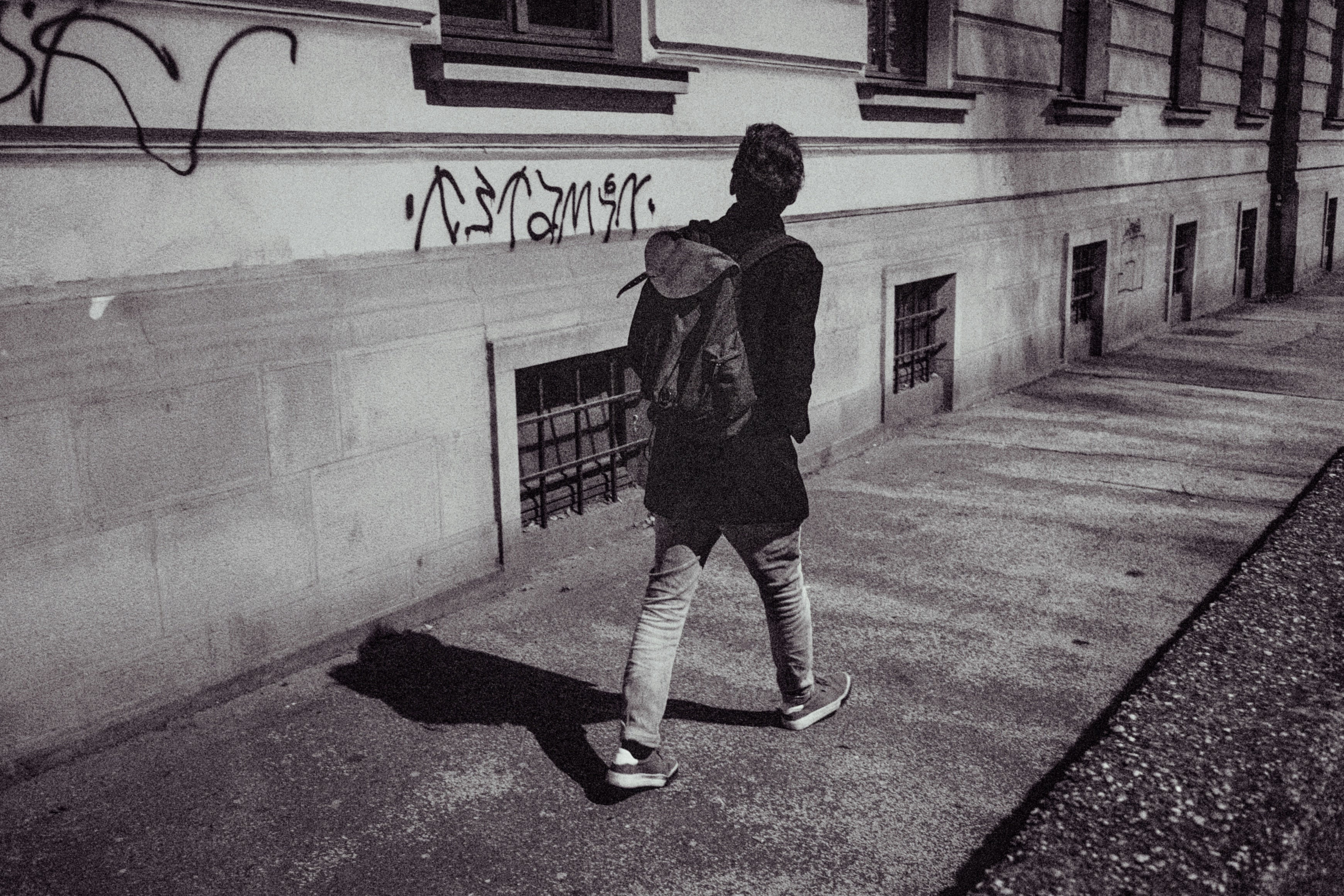
In Walking as Embodied Worldmaking: Bodies, Borders, Knowledgescapes, editor Lea Maria Spahn assembles essays from authors from different countries. Each essay expounds on the artistic practice of walking as a means of understanding the world we inhabit and how it shapes us as humans. She notes the importance of the body in space and time, and how “walking is a whole-bodied movement necessitating rhythm, acts of finding balance, finely orchestrated moments of sensory impression and proprioception with its felt relations to gravity, space and situated somatic responses.”[4] When we walk, we are embedded in a “web of sociality,” as we interact dynamically with people and environments.[5] Indeed, as our pace slows, “Walking makes visible” that which we often overlook, including our “memories, moments, and imaginations.”[6]
As I read through the various essays, I wondered whether Jesus came at the specific time he did because it required him to walk. He walked along dusty roads and fields. He walked to weddings and funerals. He walked along the Jordan River and then into and out of the wilderness. He walked the borderlands with the undesirables, noticing those overlooked and dismissed by society. He touched the sick, the poor, the hungry. Because of his walking, he understood the world in a very specific way, which gave him the courage to walk the painful path to the cross. Though Jesus asked his Father to “take this cup from me,” he also surrendered, “yet not my will but yours be done.”[7] He did not shy away from the embodied death that was to come as he lived his fully human life.
Thoughts around evangelical leadership, Christian Nationalism, and the decades-old roots, shoots, and rancid fruit of the “moral majority” feeding the political elites are still tumbling in my mind. As is the convergence between globalist and nationalist worldviews. Those issues are not likely to be resolved anytime soon.
Still, in closing, I wonder what it looks like for the people of God to adopt a posture of sacrifice for others. What roads do we need to walk, and how will that walking shape us?
What language do we need to develop so that we can truly see others? Who are we invited to notice? What systems of oppression are we asked to name and reimagine so that reconciliation can occur?
What does it look like for those who profess to follow Jesus to abide more fully in Jesus and Him in us, and how might that impact our communities, nation, and world?
[1] Inside Man, Season 1, Episode 4, Minute 55:02-55:23. Netflix.com. Accessed January 25, 2026: https://www.netflix.com/watch/81417552?trackId=284616272&tctx=0%2C0%2Ceccfa83f-1e60-40b8-95bc-082970454b76%2Ceccfa83f-1e60-40b8-95bc-082970454b76%7C%3DeyJwYWdlSWQiOiJkZThjYWU0OS02OWNiLTQwNmUtYTU4ZS0xNTc4MzRhM2VhYjgvMS8vaW5zaWRlIG1hbi8wLzAiLCJsb2NhbFNlY3Rpb25JZCI6IjIifQ%3D%3D%2C%2C%2C%2CtitlesResults%2C81332052%2CVideo%3A81417552%2CdetailsPageEpisodePlayButton.
[2] Historian, Heather Cox Richardson, does an excellent job of recounting current and historical events through her “Letters from an American” on Substack.
[3] Stephen Jenkinson: Die Wise: A Manifesto for Sanity and Soul. (Berkley, CA: North Atlantic Books, 2015) 321, 325; emphasis mine.
[4] Lea Maria Spahn, editor. Walking as Embodied Worldmaking: Bodies, Borders, Knowledgescapes. (Netherlands, Czech Republic: Set Margins’ and Brno University of Technology Faculty of Fine Arts, respectively, 2025) 15.
[5] Lea Maria Spahn, ed., 17.
[6] Lea Maria Spahn, ed., 17, 19.
[7] Luke 22:42.
Photo by Remy Gieling on Unsplash
Dr. Darcy, your questions at the end of your essay embody the humble curiosity that I see as a necessary starting point for any real change to occur. Thank you for your honesty and your gentle invitation to move toward things that unsettle us for the sake of our neighbor.